Reducing Stigma, Strengthening Communities
What does it take to end mental health stigma? Solutions based on aloha, not shame.
Seeking help can be one of the hardest steps on the path to mental wellness. For many in Hawaiʻi, stigma is a powerful barrier to accessing support and care. Lasting change must start from the neighborhoods, ʻohana (family), and trusted organizations closest to the people they serve.
This belief shaped Hawaiʻi Community Foundation's (HCF) Health & Wellness sector strategy, which calls for shifting resources, decision-making, and agency to community members closest to the solutions. The strategy prioritizes collaborative efforts that address mental and behavioral health needs across the lifespan.
Investing in Community-Led Solutions
After post-pandemic conversations with community organizations, one challenge repeatedly surfaced – even when mental health services are available, shame and fear of judgment often prevent people from seeking care.
In response, HCF launched the Mental & Behavioral Health Stigma Reduction Initiative in 2025, a statewide effort that equips local organizations with the training, tools, and resources needed to reduce stigma and promote mental wellness through holistic, community-led approaches.
Building Lasting Capacity
Through this initiative, HCF focused on strengthening the communications capacity of 17 local organizations, helping them develop messaging strategies that encourage people to seek help and support one another.
Instead of funding just one statewide campaign, we chose to invest in different organizations’ ability to tell their own stories," says HCF Health & Wellness Program Director Gregg Kishaba. "We're building 17 new powerful engines for change, each one tuned into the community it serves. This way, the work and impact multiply. Every donor dollar develops longer-lasting resources that these organizations can use again and again, for whatever issues and opportunities their communities face next."
Working with The Wayfinder Group, participating organizations identified priority audiences, developed culturally grounded messaging, and created communications plans tailored to the communities they serve. Participants designed outreach materials and refined them through peer collaboration and feedback from communications and media professionals.
Targeted Messaging, Greater Impact
Some campaigns reminded families that mental health is for everyone. Others focused on creating spaces and opportunities where people feel seen, understood, and supported.
"Hands-on training and consultation with experts supported us in taking a vague idea and growing it into a specific and targeted effort," said Hawaiʻi Health & Harm Reduction Center (H3RC) Executive Director Heather Lusk, one of the initiative grant recipients..
Another grantee, Jessica Cockrell, founder and executive director of He Hoʻomaka Hou Ana O Puna (HHHAOP) noted, "It is vital that these conversations originate from trusted community organizations because outside institutions often rely on Western-centric framing that can be profoundly retraumatizing.”
For the team at Pacific Birth Collective (PBC), this trust is built on shared relationships and connections. “We are of community, for community,” they said. “We live here, raise our families here, and have walked many of the same paths as the people we serve. That shared understanding creates trust, and trust opens the door to honest conversations where people feel safe enough to seek support without judgment.”
From Training to Action
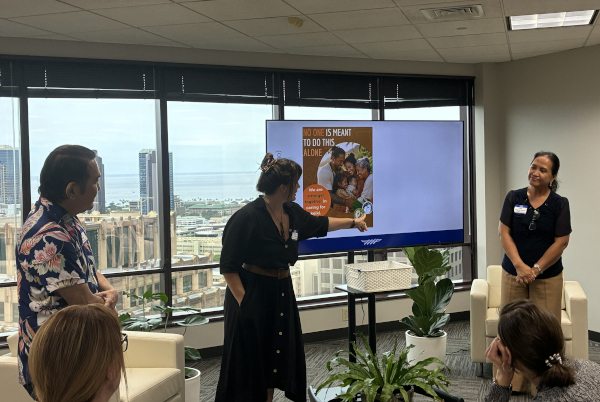
What began as a virtual training series evolved into something more. Participants expressed a desire to meet in person, share ideas, and build relationships that extended beyond the workshops.
Three organizations that demonstrated exceptional readiness throughout the program — including H3RC, HHHAOP, and PBC — will receive additional support to launch full-scale public awareness campaigns this fall.
Creating a Future Without Shame
For Kishaba, success is ultimately measured not by campaigns or materials, but by the lives they touch.
"Our goal isn't just to share a message. It's to inspire what happens next in someone's life," he says. "If a father picks up the phone, if a young person tells a friend they're struggling, if an ʻohana starts talking around the dinner table, then this strategy is working."
That quiet but powerful shift is already taking root across Hawaiʻi – communities are finding their own voices, developing trusted messengers, and empowering moments of courage. It is what becomes possible when Hawaiʻi invests in the people closest to the work — and how, together, we move toward a future where reaching out for help is met with aloha, not shame.