Hawai‘i’s Generational Workforce Commitment
A stable future, right here at home. How a new coalition is expanding pathways to living-wage careers.
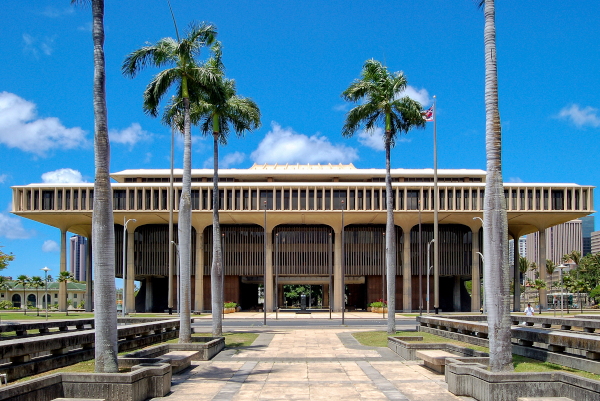
Hawai‘i’s workforce challenges are often discussed through a familiar set of statistics: young people leave the islands for better opportunities abroad, employers struggle to fill positions, and wages fail to keep pace with the cost of living. Leaders across education, business, government, nonprofits, and philanthropy are increasingly aware that these difficulties are symptoms of a larger issue – too many residents cannot find a clear pathway to building a stable future in Hawai‘i.
Building Stability Close to Home
This situation sparked the creation of Hawai‘i’s Generational Workforce Commitment, a shared goal that by 2045, everyone in Hawai‘i will have a path to a career that enables them to work, grow, thrive, and contribute to a vibrant local economy. It’s a 20-year commitment that emerged from years of collaboration among organizations such as the Hawai‘i Workforce Funders Collaborative (HWFC), originally incubated by Hawai‘i Community Foundation (HCF) and other philanthropic partners in the wake of COVID-19. As public agencies and employers came together to address urgent workforce disruptions, they saw an opportunity to sustain that connection beyond the crisis.
“There was an urgency to ensure that the momentum wasn’t lost in the years after the pandemic,” says HWFC Executive Director Matt Stevens. “What came out of that was a realization that the workforce challenges we face are really bigger than any one organization can solve on their own.”
The Truth Behind the Numbers
As HWFC and its partners examined education and employment data, the magnitude of the issue became clear. Over the next decade, roughly 170,000 young people are expected to enter Hawai‘i’s workforce. Meanwhile projections show just over 101,000 living-wage job openings during the same period.
“The problem is not going to go away on its own,” Stevens says. “Despite a lot of great work being done in the education and workforce space, the scale of the problem requires more alignment and more intentional investment.”
A Unified Front for Collective Change
Rather than pursuing isolated solutions, different groups that historically worked in tandem — from educators and employers to state agencies and funders — came together through the Learn Work Thrive Hui to coordinate efforts around the Generational Workforce Commitment’s long-term vision. The Hui began identifying opportunities for coordinated action and gained momentum this year with the passage of Senate Concurrent Resolution 139, which formally recognizes the commitment and directs the Workforce Development Council to coordinate the development of a statewide strategy.
At the heart of this work is a diverse, actively cultivated network of engaged partners united by the mission of HWFC. Backed by flexible funding from partners like HCF, this collective strength fuels the research and relationship-building needed to align organizations around a shared vision: expanding pathways to living-wage careers for every resident.
As HWFC moves from planning to action, partners are working to expand paid internships and apprenticeships, strengthen career and technical education, improve coordination among state agencies, and build better data systems to connect people to career opportunities. These investments continue to help partners test ideas, learn from what works, and build a resilient workforce system equipped for sustainable, long-term impact.